Efficient flow control is essential for maintaining a reliable and high-performing pipeline system. Selecting the wrong valve can lead to unnecessary pressure drops, reduced system efficiency, and costly operational interruptions. Among the key decisions faced by engineers and plant operators is choosing between Butterfly Valves and Ball Valves, two widely used options in modern fluid handling applications.
Both valve types are commonly applied for isolation, throttling, and flow regulation in water and industrial systems. While they serve similar purposes, their design, functionality, and performance characteristics differ significantly. With insights supported by Valves Only, a trusted Supplier in USA, this blog explains these distinctions to help ensure optimal performance, improved energy efficiency, and longer equipment lifespan.
Why Ball and Butterfly Valves Are Often Compared?
Both valves fit into the class of quarter-turn valves, hence they need just a 90° turn to close or open. Here are some more of their similarities:
- In industrial and municipal water systems, both are quite often used.
- Each enables quick action with little manual effort.
- Electric or pneumatic actuators can be attached on both.
- Each can resist medium to high stress and a variety of water temperatures.
Nevertheless, variations in operational behaviour caused by variations in flow path geometry, internal construction, and sealing mechanism call for their relative performance prior to defining either valve for a particular system.
Design and Operation Differences
Though both are quarter-turn valves, their mechanical configurations determine how they control water flow.
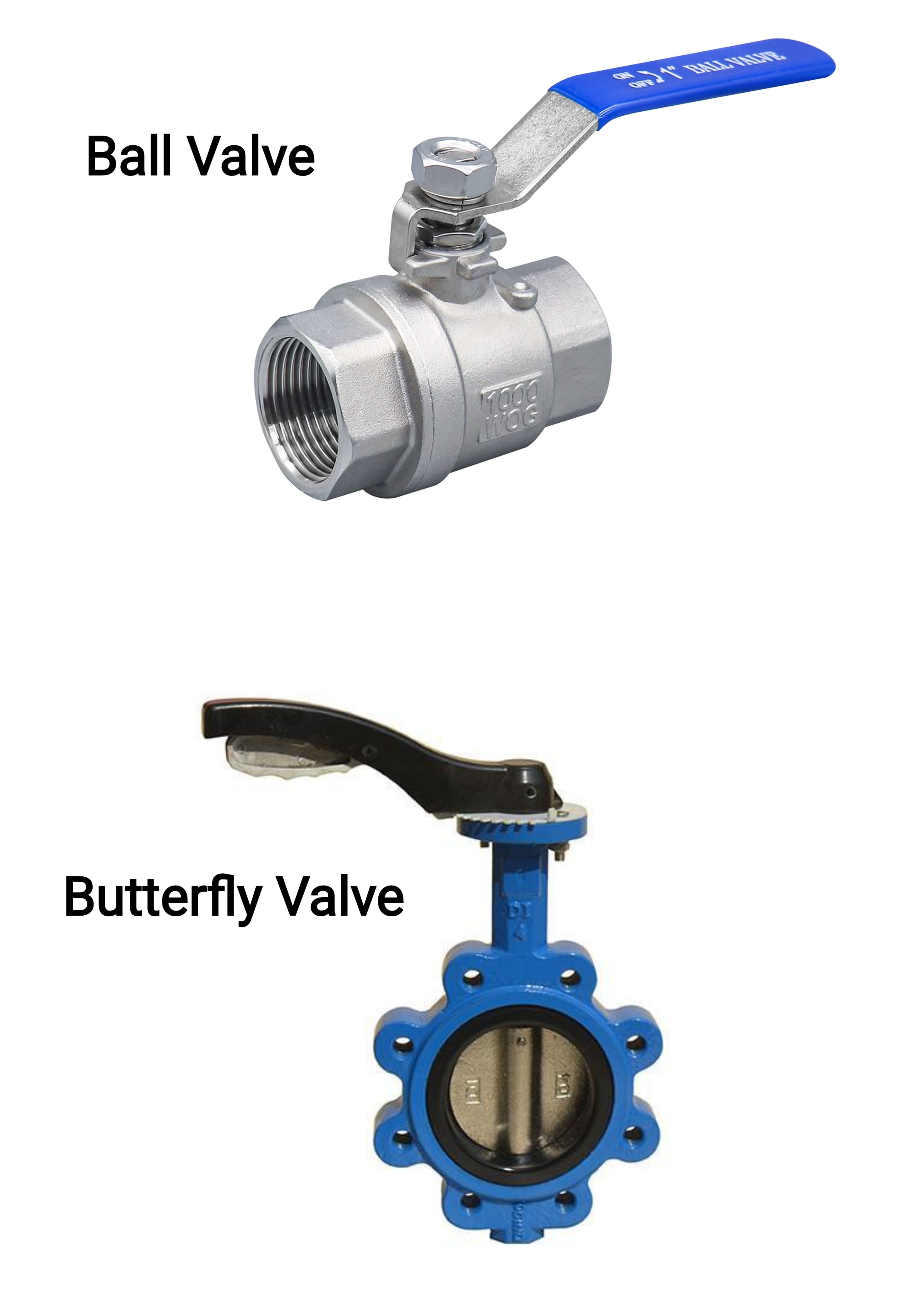
Ball Valve
- Uses a spherical ball with a central bore to control flow.
- When rotated 90°, the bore aligns with the pipeline for full flow or perpendicular for shutoff.
- Best suited for on/off applications rather than throttling.
- Requires more installation space due to its full-bore design.
- Provides tight shutoff with minimal leakage.
- Common standards: API 608, ISO 17292, ASME B16.34.
Butterfly Valve
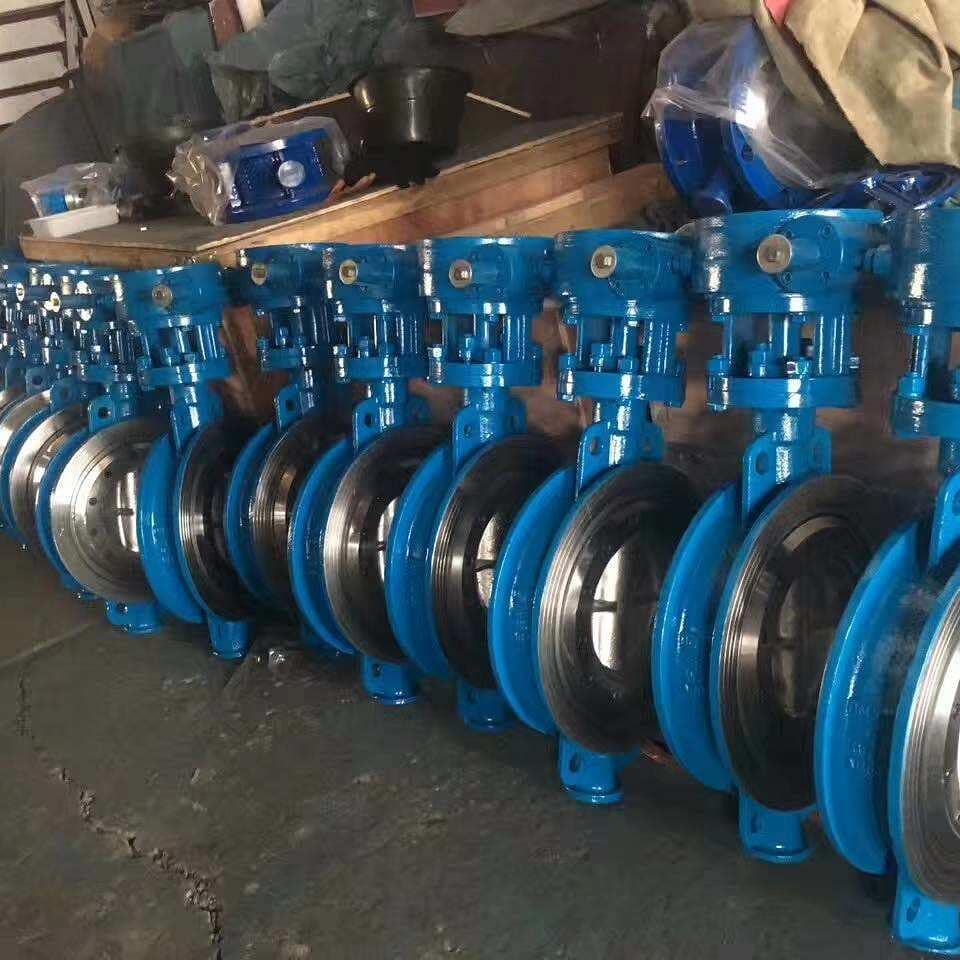
- Employs a flat circular disc mounted on a central shaft.
- The disc stays within the flow path even when fully open.
- Suitable for both on/off and throttling applications.
- Operates with low torque and requires less space.
- Lightweight and ideal for large-diameter pipelines.
- Common standards: API 609, EN 593, ISO 5752.
| Feature | Ball Valve | Butterfly Valve |
| Valve Type | Spherical Ball | Rotating disc |
| Operation | Quarter-turn, On/Off | Quarter-turn, throttling possible |
| Pipeline Size Range | Small to Medium | Medium to Very Large |
| Installation Space | Requires more linear space | Compact and Lightweight |
| Throttling Capability | Limited | Effective |
Flow Characteristics and Performance
Ball Valves
A Ball Valve offers a full-bore flow route when completely open, which reduces pressure drop and turbulence while letting water flow through with little resistance. This makes it perfect for situations where a good shutdown and energy efficiency are very important. However, partial opening causes uneven wear on the ball and seats, making it less suitable for throttling.
Typical Performance Parameters:
- Pressure Rating: Class 150–Class 600 (PN16–PN100)
- Temperature Range: –29°C to 200°C (depending on material)
- Flow Coefficient (Cv): Very high due to full bore design
Common Applications:
- Branch or bypass lines
- Water treatment systems
- Pump isolation and emergency shutoff
Butterfly Valves:
The rotating disc and small form of the Butterfly Valve help to control flow effectively over a large range of diameters. The disc offers great flow control despite some slight disturbance. These valves are very good at cooling water, distribution, and irrigation systems, where they are used a lot and save space.
Typical Performance Parameters:
- Pressure Rating: PN10–PN25 (Class 125–150)
- Temperature Range: Up to 120°C for rubber-lined, 200°C for metal-seated designs
- Torque Requirement: Significantly lower than equivalent Ball Valves
Common Applications:
- Large water distribution pipelines
- HVAC and cooling circuits
- Industrial process water control
| Aspect | Ball Valve | Butterfly Valve |
| Flow Efficiency | High, minimal obstruction | Moderate, disc creates slight turbulence |
| Pressure Drop | Low | Slightly higher than ball valves |
| Throttling Capability | Limited | Effective |
| Actuation Options | Manual, electric, pneumatic | Manual, electric, pneumatic |
| Pipeline Suitability | Small to medium | Medium to very large |
| Cost Efficiency | Higher cost for large diameters | More economical for large pipelines |
| Maintenance | Low, but seats may wear with abrasive water | Moderate, requires periodic inspection of disc and shaft |
Material Considerations and Actuation Options
- Either valve may be constructed from PVC, carbon steel, or stainless steel. The setting, working pressure, and water chemistry will guide the decision.
- Manual, electrical, or pneumatic actuation provides automated operation for both types of valves in water systems. The greater torque necessary to rotate the disc in high-flow systems means that actuators tend to operate better with bigger butterfly valves.
Pressure Handling and Sealing Performance
The ability of a valve to maintain sealing integrity under varying pressure conditions is a key factor when choosing between ball and butterfly valves for water systems.
Ball Valves:
- Designed to withstand higher pressures due to their solid, full-bore construction.
- Provide excellent bubble-tight sealing, making them ideal for applications where zero leakage is essential.
- Their seats and ball interface deliver consistent shutoff even under fluctuating pressure conditions.
- Particularly suitable for pump discharge lines, emergency isolation, and high-pressure treated water systems.
Butterfly Valves:
- Typically used in low to medium pressure ranges, but high-performance metal-seated versions can handle elevated pressures.
- Sealing efficiency depends on disc design and seat material; concentric types suit low-pressure water lines, while double-offset and triple-offset designs perform well at higher pressures.
- Provide reliable sealing for large-diameter pipelines where pressure fluctuations are moderate.
This comparison ensures system designers understand how each valve reacts to pressure dynamics, preventing issues like leakage, deformation, or valve fatigue.
When to Choose Ball or Butterfly Valves
Ball valves are preferred for:
- Pipelines requiring minimal pressure drop.
- Systems where tight shutoff is critical.
- Medium-sized pipelines with enough space for installation.
Butterfly valves are preferred for:
- Large-diameter pipelines where valve weight and space are concerned.
- Applications requiring throttling and frequent operation.
- Cost-sensitive systems needing efficient large-diameter solutions.
Though Ball valves and Butterfly valves are both employed in industrial water distribution networks, their use is dictated by particular requirements. Ball valves are ideal for significant shutoff uses since they last a long time, seal better, and produce less pressure loss. Butterfly valves are better in large-diameter and cost-sensitive places; they are utterly required in systems where space economy and throttling capacity are rather critical.
Before deciding on the finest reliable solution, take into account the substance's temperature range, degree of interaction, and pressure class. Following laws ensure long-term performance and safety adherence by ASME B16.34, API 608, and API 609.The best water flow every time depends on system size, pricing options, and needed control accuracy; therefore, eventually, one must pick between them.