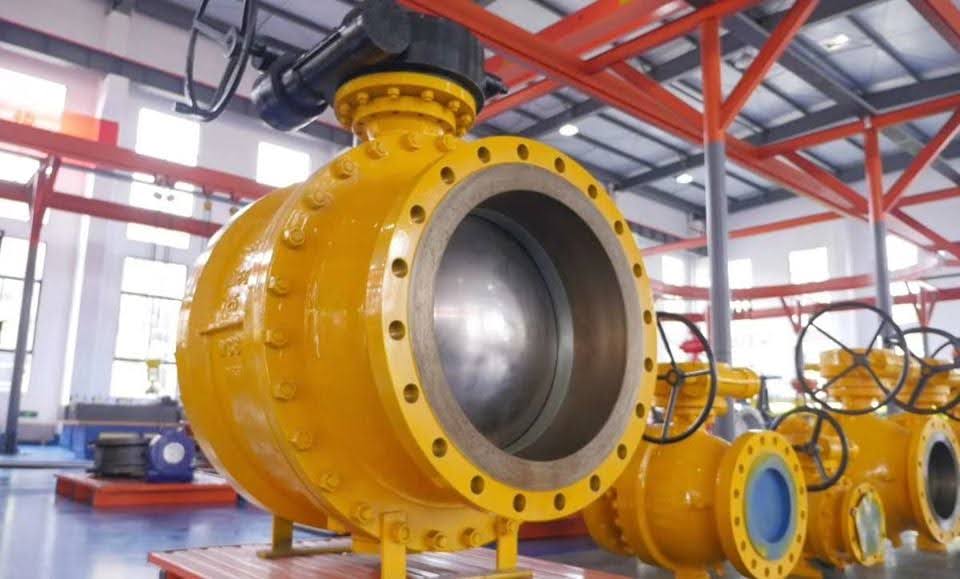
Modern pipeline systems operating under high pressure, wide temperature ranges, and large nominal diameters require valve designs that can maintain sealing reliability while managing internal mechanical loads in a controlled manner. A Trunnion Mounted Ball Valve Supplier in USA is typically considered for applications where operational stability, predictable torque, and long service life are essential engineering requirements. Trunnion mounted ball valves are purpose-built to address these needs through fixed-ball construction, structured load paths, and pressure-assisted sealing mechanisms suited for demanding industrial environments.
From a technical content and application-alignment perspective, Valves Only focuses on engineering clarity, standards compliance, and service-specific suitability, which aligns with the expectations of industrial operators and EPC contractors across the United States.
Engineering Purpose and Design Intent
The primary purpose of a trunnion mounted ball valve is to provide reliable quarter-turn isolation in systems where internal pressure forces must be carefully controlled. Unlike designs that allow internal components to shift under load, this valve configuration uses a mechanically supported ball to maintain geometric stability.
The ball is supported by a trunnion shaft at the bottom and a stem at the top. This dual-support arrangement ensures that pressure-induced axial forces are absorbed by the valve structure rather than transferred to the stem or seat interfaces. As a result, internal alignment remains stable throughout the valve’s operating life.
Major Components and Construction
A typical trunnion mounted ball valve consists of the following major components:
- Valve body and closure assembly
- Fixed ball with trunnion support
- Upper stem and bearing system
- Seat assemblies with spring energization
- Body seals and stem sealing system
Each component is engineered to function within defined load limits, contributing to overall mechanical integrity under high-pressure service conditions.
Working Principle of Trunnion Mounted Ball Valve
The working principle of a trunnion mounted ball valve is based on rotational movement of a fixed-position ball.
During valve operation:
- The actuator rotates the stem by 90 degrees
- The ball rotates concentrically within the valve cavity
- The ball remains axially stationary throughout operation
- Line pressure acts primarily on the upstream seat
Sealing is achieved as the upstream seat moves toward the ball under pressure, creating a tight metal-to-seat or soft-seat interface depending on design. This pressure-assisted behaviour allows the valve to maintain consistent shutoff even during pressure fluctuations or transient operating conditions.
Seat Design and Sealing Behavior
Seat design plays a critical role in the sealing reliability of trunnion mounted ball valves. Seats are commonly spring-loaded to provide sealing at low pressure and become pressure-energized as line pressure increases.
Seat configurations are selected based on service conditions:
- Soft seats for clean fluids requiring tight shutoff
- Metal seats for high-temperature or erosive service
- Dual sealing arrangements for critical isolation points
Many designs also incorporate cavity pressure control features that allow trapped pressure to be safely relieved, supporting safe operation during blocked-in conditions.
Load Distribution and Force Management
One of the most significant engineering advantages of trunnion mounted ball valves is controlled load distribution.
Internal forces generated by system pressure are managed through defined mechanical pathways:
- Axial pressure loads are transferred directly to the trunnion support
- Rotational forces are isolated to the stem and bearing system
- Seat assemblies manage sealing forces independently
- The valve body maintains structural rigidity under pressure
This separation of forces minimizes stress concentration, reduces component deformation, and supports stable torque characteristics across repeated operating cycles.
Materials of Construction
Material selection is governed by pressure rating, operating temperature, corrosion potential, and fluid compatibility.
| Component | Typical Materials |
| Valve Body | ASTM A216 WCB, A352 LCC, CF8, CF8M |
| Ball | Forged stainless steel, hard chrome coated |
| Stem | SS410, SS316 |
| Seats | PTFE, RPTFE, Nylon, Metal |
| Sealing Elements | Graphite, PTFE |
All materials are selected to meet applicable ASTM, ASME, and API requirements commonly specified in US-based industrial projects.
Technical Specifications
| Parameter | Range |
| Nominal Size | 2” to 56” |
| Pressure Rating | ANSI Class 150 to 2500 |
| Temperature Range | -46°C to +450°C |
| End Connections | Flanged, Butt Weld, RTJ |
| Operation | Manual, Pneumatic, Electric |
| Design Standards | API 6D, ASME B16.34 |
| Fire Safe Design | API 607 / API 6FA |
Exact limits vary depending on material selection and service conditions.
Safety and Reliability Features
Trunnion mounted ball valves are designed with multiple features that enhance operational safety and reliability:
- Blowout-proof stem design
- Anti-static grounding devices
- Emergency seat sealant injection ports
- Fire-safe stem and body sealing systems
- Automatic cavity pressure relief
These features support safe operation during abnormal pressure or temperature events and help maintain sealing integrity in critical service.
Operational Torque Behavior and Actuator Selection
Operational torque is a critical parameter in trunnion mounted ball valves used in high-pressure systems. The fixed ball design prevents pressure-induced loading on the ball, resulting in stable and predictable torque during operation.
Torque is primarily influenced by seat friction and stem bearing resistance. Breakaway and running torque values remain consistent, supporting smooth operation during repeated cycling.
Actuator selection is based on operating pressure, temperature, and required safety margins. The controlled torque behavior of trunnion mounted ball valves allows accurate sizing of pneumatic or electric actuators, enabling reliable automation and consistent performance.
Inspection, Testing, and Quality Control
For industrial applications in the United States, inspection and testing are essential elements of valve qualification. Trunnion mounted ball valves typically undergo:
- Hydrostatic shell pressure testing
- Seat leakage and sealing verification
- Functional operation and torque testing
- Fire-safe testing where specified
- Material traceability and documentation review
Testing is performed in accordance with API and ASME standards to ensure consistent performance and regulatory compliance.
Industrial Applications and Operating Environments
Trunnion mounted ball valves are commonly specified in systems where isolation reliability and mechanical stability are critical.
Typical applications include:
- Oil and gas transmission pipelines
- Storage facilities and LNG processing
- Refining and petrochemical process units
- Power generation infrastructure
- Offshore and subsea installations
- High-pressure utility and industrial networks
Their design supports both manual operation and automated control systems in demanding operating environments.
Engineering Expectations in the USA Market
In the US industrial landscape, valve selection is driven by strict standards compliance, documentation quality, and application-specific engineering validation. A Trunnion Mounted Ball Valve Supplier in USA is expected to demonstrate consistent testing outcomes, full material traceability, and adherence to applicable API and ASME standards throughout the product lifecycle.
Beyond dimensional and pressure compliance, engineering expectations also include clearly defined design calculations, verified pressure–temperature ratings, and documented inspection procedures. Valves Only aligns with these expectations through structured technical validation, comprehensive engineering documentation, and design support that reflects the operational and regulatory requirements of US-based industrial projects.
Conclusion
Designed for high-pressure and big-diameter pipeline systems where consistent load distribution, reliable sealing performance, and predictable operation are crucial, trunnion-mounted ball valves are Their fixed-ball design, pressure-assisted seating, and organized force control help to ensure consistent isolation throughout challenging industrial uses. Understanding these design ideas helps engineers and project teams choose specifications that will keep the system safe over time, make it work better, and meet all the rules.
For those seeking deeper technical insight and application-focused guidance, Valves Only serves as a reference point for understanding how design intent aligns with real-world operating requirements.