Pressure control devices are necessary for the protection of equipment, the safety of personnel, and stability of the process in oil & gas, refinery, power generation, water & wastewater, petrochemical, mining, and marine & offshore systems. In general, pressure relief valves and safety valves are two different types of devices that are most often referred to as one. However, they have different functions depending on the design of the system, the operating conditions, and applicable codes.
At Valves Only, a trusted Supplier in USA, understanding these functional differences is critical for correct valve selection and reliable overpressure protection in demanding industrial environments.
Purpose of Overpressure Protection
Overpressure situations may be caused by a blocked outlet, thermal expansion, equipment failure, or process upsets. The excessive pressure can cause the equipment to be damaged, to leak, or even to fail in a violent way if it not controlled.
Pressure Relief Valves: Functional Overview
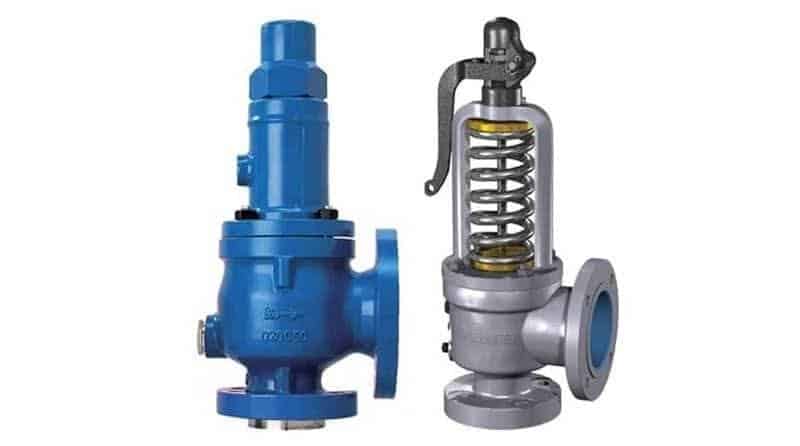
Pressure relief valves (PRVs) are equipped with a mechanism that allows them to open slowly when the pressure in the system exceeds the preset limit. They regulate the flow to reduce the extra pressure and close again when the system returns to normal operating conditions.
Key Functional Characteristics
- Proportional or modulating opening behavior
- Controlled pressure reduction rather than rapid discharge
- Suitable for liquid and incompressible media
- Designed for frequent operation and system stabilization
Typical Industrial Applications
- Water & Wastewater: Pump protection and pipeline pressure control
- Power Generation: Cooling water and auxiliary systems
- Mining: Slurry and utility water systems
- Marine Systems: Ballast and service water applications
Pressure relief valves are commonly used where controlled pressure regulation is required rather than immediate full-capacity discharge.
Safety Valves: Functional Overview
Safety valves are intended to open fully and rapidly when the set pressure is reached. Their primary function is to provide instant relief from excessive pressure thus avoiding catastrophic failures, especially in systems using compressible fluids.
Key Functional Characteristics
- Rapid, full-lift opening at set pressure
- High discharge capacity
- Suitable for gases, vapors, and steam
- Typically operate as emergency protection devices
Typical Industrial Applications
- Oil & Gas: Compressors, separators, and gas processing units
- Refineries: Boilers, heaters, and pressure vessels
- Power Generation: Steam systems and boilers
- Petrochemical Plants: High-pressure gas and vapor services
Safety valves are a must have in situations where sudden pressure increase can jeopardize human lives severely
Pressure Relief vs Safety Valves: Key Differences
| Parameter | Pressure Relief Valve | Safety Valve |
| Opening Action | Gradual / modulating | Instantaneous / full lift |
| Primary Media | Liquids | Gases, vapors, steam |
| Pressure Control | Regulates excess pressure | Prevents catastrophic overpressure |
| Discharge Capacity | Moderate | High |
| Typical Operation | Frequent, controlled | Emergency, infrequent |
| System Impact | Stabilizes pressure | Rapid pressure release |
Industry- Focused Application Guidance
| Industry | Pressure Relief Valve Applications | Safety Valve Applications |
| Oil & Gas | Liquid pipelines, pumping stations, thermal expansion control | Gas compressors, separators, pressure vessels |
| Refineries | Liquid transfer lines, auxiliary systems | Heaters, boilers, fractionation columns |
| Power Generation | Cooling water, condensate, balance-of- plant systems | Boilers, steam lines, turbines |
| Water & Wastewater | Pumps, pipelines, surge protection | Limited to specialized pressurized systems |
| Petrochemical | Liquid chemical transfer and storage | High-pressure gas and vapor service |
| Mining | Slurry lines, utility water systems | Compressed air and gas systems |
| Marine & Offshore | Ballast water, cooling, hydraulic circuits | Gas handling and steam services |
Selection Considerations
Correct selection depends on several engineering factors:
- Nature of the Process Medium
The compressibility of the process fluid is a primary selection factor. Pressure relief valves are generally applied in liquid services where pressure builds gradually, while safety valves are mandatory for compressible media such as gases, vapors, and steam where rapid pressure escalation can occur.
- Rate of Pressure Rise
Systems prone to sudden pressure spikes require devices capable of immediate full-capacity discharge. Safety valves are designed for fast-opening response, whereas pressure relief valves are suited for applications where pressure increases in a controlled manner.
- Required Discharge Capacity
Safety valves are selected for high-flow emergency discharge scenarios, particularly in pressure vessels and steam systems. Pressure relief valves are used where controlled modulation is sufficient to maintain system stability.
- Operating Pressure and Set Pressure Margin
The pressure set of a valve should be consistent with the maximum allowable working pressure (MAWP) of the equipment. Having a proper margin between the normal operating pressure and the set pressure is very important to avoid valve fatigue.
- Codes, Standards, and Regulatory Compliance
The valves to be used should correspond to the local codes and site specifications.Safety valves are usually subject to very strict standards for pressure equipment while the pressure relief valves follow the system- specific requirements depending on the service and industry.
- System Criticality and Safety Classification
In scenarios where the safety of the system is at stake and the failure may lead to personnel injury and equipment damage, safety valves are preferred. Pressure relief valves are used in systems focused on operational control rather than emergency protection.
Although both pressure relief valves and safety valves are used for overpressure protection as a general goal, they differ significantly in their functional behavior, response characteristics, and application scope. In contrast to safety valves that allow rapid, full, capacity discharge for critical gas and steam applications, pressure relief valves are used to provide controlled pressure regulation for liquid systems.
As a leading Supplier in USA, Valves Only supplies engineered pressure relief and safety valve solutions tailored to industry-specific operating conditions, ensuring safe, reliable performance where system protection is non-negotiable.