
Pressure Seal Gate Valves: Design Principle and High-Pressure Service
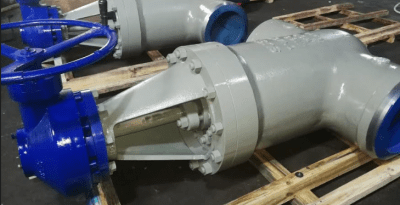
Among the various gate valve constructions used in industrial piping systems, the pressure seal gate valve occupies a specific and well-established position in high-pressure, high-temperature service. Standard bolted bonnet gate valves perform reliably across a wide range of moderate-pressure applications, but as a system pressure and temperature increase, the limitations of conventional bonnet joint designs become increasingly relevant. Pressure seal gate valves address those limitations through a fundamentally different approach to bonnet sealing, one where the system pressure itself contributes to maintaining joint integrity rather than working against it. This self-sealing, self-reinforcing characteristic makes pressure seal gate valves the standard specification for the highest pressure classes encountered in power generation, petrochemical processing, and high-pressure steam distribution. Available in sizes from NPS 2 to NPS 24, they cover the full range of high-pressure piping encountered in these industries. At ValvesOnly, a valve supplier in Europe, pressure seal gate valve requirements are regularly assessed during product selection reviews and engineering evaluations for severe service and high-pressure applications.
The Fundamental Design Principle
To understand why the pressure seal design is used, it is helpful to consider what happens to a standard bolted bonnet gate valve as system pressure increases. In a bolted bonnet gate valve, the joint between the body and bonnet is sealed by a gasket compressed between flanged faces and held by a ring of bolts. The joint integrity depends entirely on the bolt preload resisting the pressure load trying to separate the joint faces.
In the pressure seal design, the bonnet sits inside the valve body rather than bolting to a flange. When system pressure acts on the internal surfaces, it drives the bonnet upward against a retaining ring and simultaneously forces the pressure seal gasket outward against the angled surfaces of the bonnet and body bore. The higher the system pressure, the greater the seating force on the gasket faces. This self-sealing, self-reinforcing behaviour is the defining characteristic of the design: system pressure enhances the seal rather than threatening it, enabling reliable joint integrity at pressure and temperature conditions where bolted bonnet designs are not viable.
Construction and Key Components
Several key components work together in a pressure seal gate valve to deliver containment and isolation under high-pressure, high-temperature conditions.
The valve body is a heavy-walled pressure-containing shell, internally bored to accept the bonnet assembly and precision-machined in the bonnet seating region to engage the pressure seal gasket. End connections are typically flanged to ASME B16.5 or butt-weld ends for direct pipeline integration.
The pressure seal gasket is a machined ring with an angled seating profile. When system pressure drives the bonnet upward, the angular geometry converts the axial load into a radial seating force on the gasket faces. Soft iron gaskets are standard in steam and hydrocarbon service; stainless steel gaskets are used in corrosive applications; graphite gaskets are specified where the highest temperature resistance is required.
The gate assembly uses a wedge or parallel slide gate that travels vertically to open or close the flow path. Seating surfaces on the gate and body seats are typically hard-faced with Stellite or a cobalt alloy to resist erosion and wear under high-pressure flow. The stem connects the gate to the handwheel or actuator above the bonnet. Rising stem configurations provide visible position indication.
Actuation Options
Pressure seal gate valves are available with a range of actuation configurations to suit process control and remote operation requirements. Manual handwheel operation with a gearbox is standard for larger sizes where stem torque exceeds direct manual capability. Electric actuators provide remote open/close or modulating control and are commonly integrated with plant DCS or emergency shutdown systems. Pneumatic actuators are used where fast stroking or fail-safe action is required and instrument air is available. Hydraulic actuators are specified in applications demanding the highest output forces, including main steam isolation on large power generation units. Actuator selection must account for the valve’s operating torque at maximum differential pressure, the required stroking speed, and the fail-safe position on loss of power or signal.
Operating Pressure and Temperature Capabilities
The pressure seal gate valve is built for the upper end of the industrial pressure-temperature range. It is the standard design for ASME Class 900, Class 1500, and Class 2500 service, and is also used in Class 600 applications where anticipated conditions exceed bolted bonnet reliability limits.
Pressure-temperature capabilities are primarily determined by body material:
- Carbon steel A216 WCB bodies are rated to approximately 425°C at full pressure class ratings.
- Low alloy steel WC6 bodies provide service to around 540°C, typical in conventional power generation steam applications.
- Low alloy steel WC9 bodies are rated to approximately 595°C for high-temperature steam service.
- F91 alloy steel bodies are used in ultra-supercritical power generation where steam temperatures reach 600°C and above.
- Stainless steel bodies in CF8M and CF3M grades are specified for corrosive process applications at elevated temperatures.
Applications in High-Pressure Service
The most critical application of pressure seal gate valves is in power generation. Main steam lines between boiler and turbine operate at the highest pressure-temperature conditions in the plant. Isolation valves on these lines must provide dependable shut-off while maintaining joint integrity across thousands of thermal cycles over decades of service. Pressure seal gate valves in F91 or WC9 alloy steel are the standard specification for main steam isolation, reheat steam, and hot reheat lines in modern power plants.
Refineries and petrochemical plants use pressure seal gate valves in reactor feed and effluent systems, high-pressure fractionation, and hydrocracker and hydrotreater circuits, where elevated pressure and hydrogen partial pressure create demanding service conditions. Sour service applications in these environments require compliance with NACE MR0175 / ISO 15156, which specifies hardness limits for welds and pressure-containing components.
In industrial steam distribution paper mills, chemical plants, large-scale heating systems pressure seal gate valves are used where steam pressures fall in the Class 600 to Class 900 range. The reliability advantage of the self-sealing design justifies its higher initial cost wherever joint leakage would carry safety, environmental, or production consequences.
Fugitive Emissions Compliance
Fugitive emissions performance is an increasingly prominent procurement requirement for pressure seal gate valves, particularly in refinery, petrochemical, and industrial gas applications. Key standards governing fugitive emissions qualification include API 624, which defines type testing requirements for rising stem valves through multiple thermal cycles; ISO 15848-1, the international standard for measurement, test, and qualification procedures for fugitive emissions from industrial valves; and TA Luft, the German technical instruction on air quality that remains a widely referenced benchmark in European procurement specifications.
Maintenance Considerations
One practical advantage of the pressure seal design is maintenance accessibility. Once the valve is depressurised and removed from service, the entire internal assembly gate, stem, seats, and packing can be accessed by lifting the bonnet as a single unit, rather than removing components individually from inside the body.
Scheduled maintenance activities include:
- Pressure seal gasket inspection and replacement; the gasket deforms in service and should be renewed rather than reused following disassembly.
- Inspection of gate and seat faces for erosion, scoring, or corrosion damage; renewal of hard-facing by weld deposit and grinding where lapping cannot restore seating surfaces.
- Stem packing replacement using high-temperature graphite packing rings correctly sized for the stem diameter and packing chamber.
- Retaining ring thread inspection to confirm the thread condition is adequate to retain the bonnet under system pressure after reassembly..
Standards and Specifications
Applicable standards include:
- ASME B16.34 – pressure-temperature ratings and design requirements for valves.
- API 600 – design, material, and testing requirements for steel gate valves in bolted bonnet and pressure seal configurations.
- API 602 – compact steel gate valves for smaller bore applications.
- MSS SP-144 – the dedicated standard for pressure seal bonnet valves, covering design, materials, testing, and marking requirements specific to this valve type.
- API 624 – type testing for fugitive emissions performance of rising stem valves.
- ISO 15848-1 – measurement and qualification of fugitive emissions from industrial valves.
- TA Luft – German air quality technical instruction, widely referenced in European fugitive emissions procurement requirements.
- NACE MR0175 / ISO 15156 – material requirements for sour service applications in oil and gas environments.
Pressure seal gate valves are a technically sound solution to the problem of maintaining bonnet joint integrity at extreme pressures and temperatures. The self-sealing, self-reinforcing design principle where system pressure enhances rather than compromises the seal delivers consistent performance in conditions where bolted bonnet designs are not viable. Available across a size range of NPS 2 to NPS 24 and in actuation configurations from manual gearbox to electric, pneumatic, and hydraulic drives, the design is adaptable to the full scope of high-pressure isolation duties. Their use in main steam systems, high-pressure feedwater lines, and severe-service petrochemical circuits reflects decades of demonstrated reliability under the most demanding industrial operating conditions.